Somewhere right now, a buyer in Dubai, Berlin or Toronto is searching for exactly the kind of product an Indian business makes: handloom textiles, spices, leather goods, engineering parts, skincare or home décor. Cross-border e-commerce, digital payments and simpler online registrations have made it more realistic than ever for a first-time founder, a D2C brand or a small manufacturer to sell abroad.
But exporting is not just "selling to another country." You need the right product, a market that actually wants it, a business structure that fits your goals, and a set of registrations that customs, banks and tax authorities expect to see. This guide walks you through every step, in the order that makes the most sense, so you can go from idea to first shipment with confidence.

Indian exporters packing handloom textiles and spices for overseas buyers.
Step 1: Choose a Product with Global Demand
Your product decides almost everything else: which countries you target, which registrations you need, how you price and how you ship. Start with what you know or can reliably source, then check it against real demand.
What makes a good export product
· Proven demand abroad: buyers in other markets already purchase it, or a close substitute.
· A clear advantage: price, craftsmanship, origin (for example, Indian spices or textiles), quality or uniqueness.
· Shippability: weight, fragility, shelf life and packaging affect your logistics costs and options.
· Regulatory fit: some goods are restricted, need licences, or must meet product standards (food safety, labelling, certifications) in the destination country.
How to validate demand
Look at India's export data on official trade portals, browse international marketplaces to see which Indian-origin products sell and at what price points, and talk to your Export Promotion Council or commodity board, which often publishes product- and market-level insights. Check the ITC(HS) classification for your product early; the HS code drives duties, restrictions and documentation.
Step 2: Do Market Research for Your Target Countries
Rather than trying to sell everywhere, shortlist two or three countries and study them properly.
What to research
· Demand and competition: who already sells there, from which countries, and at what price.
· Import duties and rules: tariffs, product standards, labelling and certification requirements in the destination country.
· Trade agreements: India's free trade and preferential agreements can reduce duties for qualifying goods if you hold the right certificate of origin.
· Buyer behaviour: do buyers purchase through distributors, wholesalers, marketplaces or direct online?
· Logistics and payment risk: transit times, courier and freight options, and how reliably buyers pay.
Where to find reliable information
Useful starting points include the DGFT website, Export Promotion Councils, Indian missions and trade commissions abroad, and the destination country's own customs and standards authorities. Trade fairs, virtual buyer-seller meets and marketplace data can then help you test real interest before you commit stock.

Shortlist two or three target countries and research them properly.
Step 3: Pick Your Export Business Model
Before you register anything, decide how you will export, because it shapes the registrations, investment and margins involved.
Direct vs indirect exports
In direct exporting, you find overseas buyers, handle documentation and ship goods yourself (with a logistics partner). In indirect exporting, you sell to an intermediary in India, such as a merchant exporter, trading house or buying agent, who then exports.
Merchant exporter vs manufacturer exporter
A merchant exporter buys finished goods from manufacturers and exports them, focusing on sourcing, sales and buyer relationships. A manufacturer exporter makes the goods and exports them, controlling quality and cost but carrying the burden of production.
Model
How it works
Pros
Cons
Best for
Direct export
You sell to overseas buyers and manage export yourself
Higher control and margin; direct customer relationships
More paperwork, compliance and payment risk
D2C brands, confident exporters
Indirect export
You sell to an Indian intermediary who exports
Low risk; minimal export paperwork
Lower margin; little brand visibility abroad
First-time makers testing exports
Merchant exporter
You source goods from manufacturers and export them
No factory needed; flexible product range
Dependent on suppliers for quality and timelines
Traders with buyer networks
Manufacturer exporter
You produce and export your own goods
Control over quality, cost and supply
Higher capital and operational load
MSMEs and established producers

A merchant exporter sourcing finished goods from an Indian manufacturer.
Step 4: Register Your Business Structure
Every exporter needs a legal entity. Your choice affects liability, taxation, compliance effort and how easily you can raise money or win larger buyers' trust.
Structure
Liability
Setup and compliance
Credibility with buyers and banks
Suits
Sole proprietorship
Unlimited (personal)
Simplest; no separate incorporation
Basic
Solo founders testing the market
Partnership firm
Unlimited for partners
Partnership deed; moderate
Moderate
Two or more partners, small operations
LLP
Limited to contribution
Registered with MCA; moderate compliance
Good
Professional partners wanting limited liability
One Person Company (OPC)
Limited
Registered with MCA; company-style compliance
Good
Single founders wanting a company structure
Private Limited (Pvt Ltd)
Limited
Registered with MCA; highest ongoing compliance
Strong
Brands planning to scale or raise funds
Proprietorships and partnerships are quick to start, while LLPs, OPCs and Pvt Ltd companies are incorporated through the Ministry of Corporate Affairs (MCA) portal. If you are unsure, a chartered accountant or company secretary can help you weigh tax and compliance trade-offs.
Step 5: Obtain a PAN and Open a Current Account
PAN
A Permanent Account Number (PAN) is the foundation of your export identity. For a sole proprietorship, the proprietor's personal PAN is typically used; partnerships, LLPs and companies need a PAN in the entity's name, which companies usually receive as part of incorporation. Apply through the Income Tax Department's authorised channels if you do not already have one.
Current account
Open a current account in your business's name with a bank authorised to deal in foreign exchange (an Authorised Dealer, or AD, bank). Export proceeds flow into this account, and the same bank will issue the AD code you need for customs. Ask about foreign currency inward remittance handling, export documentation services and charges before choosing.

Open a current account with an Authorised Dealer (AD) bank.
Step 6: Complete Export Registrations: IEC, GST and AD Code
Import Export Code (IEC)
The IEC, issued by the Directorate General of Foreign Trade (DGFT), is mandatory for most commercial exports and imports. It is linked to your PAN and applied for online on the DGFT portal. DGFT also requires IEC holders to keep their details updated periodically, so make a note to check the current update requirements.
GST registration
Register under GST on the GST portal. Exports are generally treated as zero-rated supplies, and exporters typically either file a Letter of Undertaking (LUT) to export without paying IGST, or pay IGST and claim a refund. Ask your tax adviser which route suits your cash flow.
AD code registration
Your AD bank issues an Authorised Dealer code, which you register with customs at each port or airport you export from, via the ICEGATE system. Without it, your shipping bill cannot be processed and export proceeds cannot be properly reconciled.
Other registrations to consider
· RCMC (Registration-cum-Membership Certificate) from the relevant Export Promotion Council, often needed to claim certain benefits.
· Udyam registration for MSMEs, which can help with access to certain schemes and credit.
· Product-specific licences, such as FSSAI for food, or commodity board registrations for items like spices, tea or coffee.
Step 7: Plan Your Investment and Understand Expected Returns
There is no single figure for what it costs to start exporting; it depends on your product, model and scale. Instead of guessing a number, map out the cost components and the factors that drive returns.
Cost components
· Setup costs: business registration, professional fees, IEC, GST and other registrations, and certifications.
· Product costs: sourcing or manufacturing, samples, quality testing and export-grade packaging.
· Marketing and sales: website, marketplace fees, trade fairs, catalogues and buyer outreach.
· Logistics: domestic transport, international shipping, insurance, customs clearance and destination duties if you deliver duty paid.
· Working capital: the gap between paying suppliers and receiving payment from overseas buyers.
· Banking and forex: remittance charges, currency conversion and export credit costs.
What drives returns
· Pricing and Incoterms: whether you quote ex-works, FOB, CIF or delivered duty paid changes who bears which costs.
· Product margin and volumes: repeat buyers and larger orders improve unit economics.
· Export incentives: schemes such as RoDTEP, duty drawback and others under the Foreign Trade Policy can improve margins if you qualify.
· Exchange rates: currency movements can help or hurt realisations.
· Payment terms and logistics efficiency: faster collection and the right shipping mode protect cash flow and margin.
Build a simple costing sheet per shipment and per market, and update it as real numbers come in.
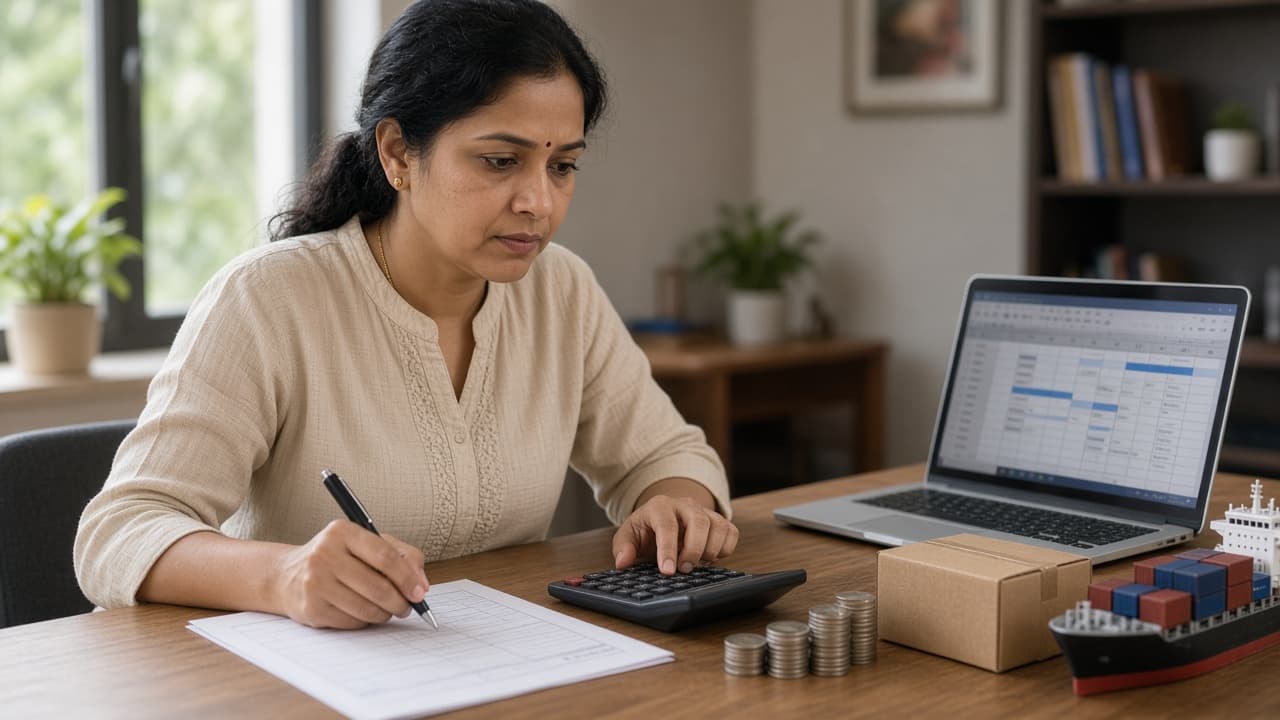
Map every cost component per shipment before you quote a price.
Non-Static: Changes Every Year
Exporting is a non-static area. Parts of this setup change regularly, sometimes every year, so treat this guide as a 2026 starting point rather than the final word.
· Rules and procedures: DGFT notifications, Foreign Trade Policy amendments, customs procedures and GST rules are updated periodically.
· Fees and charges: government application fees, bank charges and professional fees can change.
· Schemes and incentives: export incentive schemes, their rates, eligible products and validity are revised from time to time.
· Timelines and deadlines: processing times, IEC update windows, LUT renewal and filing due dates can shift.
· Destination-country rules: tariffs, trade agreements and product standards abroad also change.
Important: Always verify current rules, fees and timelines on official sources such as the DGFT portal, the GST portal and the Income Tax e-filing portal, as well as CBIC/ICEGATE for customs, before you act.
Export Business Setup Checklist
☐ Shortlisted product(s) and confirmed the ITC(HS) code
☐ Researched two or three target countries, including duties and product rules
☐ Chosen an export model (direct or indirect; merchant or manufacturer)
☐ Registered the business structure
☐ PAN in place for the business or proprietor
☐ Current account opened with an AD bank
☐ IEC obtained from DGFT
☐ GST registration done and LUT filed (if applicable)
☐ AD code registered with customs via ICEGATE
☐ RCMC, Udyam and product-specific licences checked
☐ Costing sheet prepared, including logistics and working capital
☐ Shipping partner and documentation process set up
☐ Current rules verified on DGFT, GST and Income Tax portals
Frequently Asked Questions
Can I start an export business as an individual?
Yes. Many exporters start as sole proprietors using their personal PAN. As you grow, you can move to an LLP or Private Limited company for limited liability and stronger credibility.
Is IEC mandatory for every export?
IEC is required for most commercial exports and imports from India. Some limited exemptions exist, so check the current DGFT rules for your situation.
Do I need GST registration to export?
In most cases, yes, especially if you want to export under LUT or claim IGST refunds. Confirm thresholds and requirements on the GST portal or with a tax adviser.
Should I start with direct or indirect exports?
Indirect exports are lower-risk for testing demand, while direct exports offer more control and margin. Many businesses start indirectly or with small direct shipments, then scale.
How much money do I need to start exporting?
It depends on your product, model and target market. Estimate setup, product, marketing, logistics and working capital costs rather than relying on a generic figure.
Do export rules change often?
Yes. Policies, fees, schemes and timelines are revised regularly, so verify details on official portals before every major decision.
Conclusion
Setting up an export business from scratch in 2026 comes down to a clear sequence: pick a product the world wants, research the right markets, choose your export model, and put the legal foundations in place with your business structure, PAN, current account, IEC, GST and AD code. Get those right, keep a close eye on costs and cash flow, and stay current with rules that change every year.
Start small, learn from your first shipments, and scale what works. Indian products already have a place in global markets; with the right setup, yours can too.
Ship Internationally with SkyNet
Once your export business is set up, the next step is getting your products to customers abroad. SkyNet helps Indian exporters, D2C brands and MSMEs ship internationally, with documentation support and a choice of couriers to fit your shipments. When you're ready to send your first international order, get in touch with SkyNet to explore your shipping options.
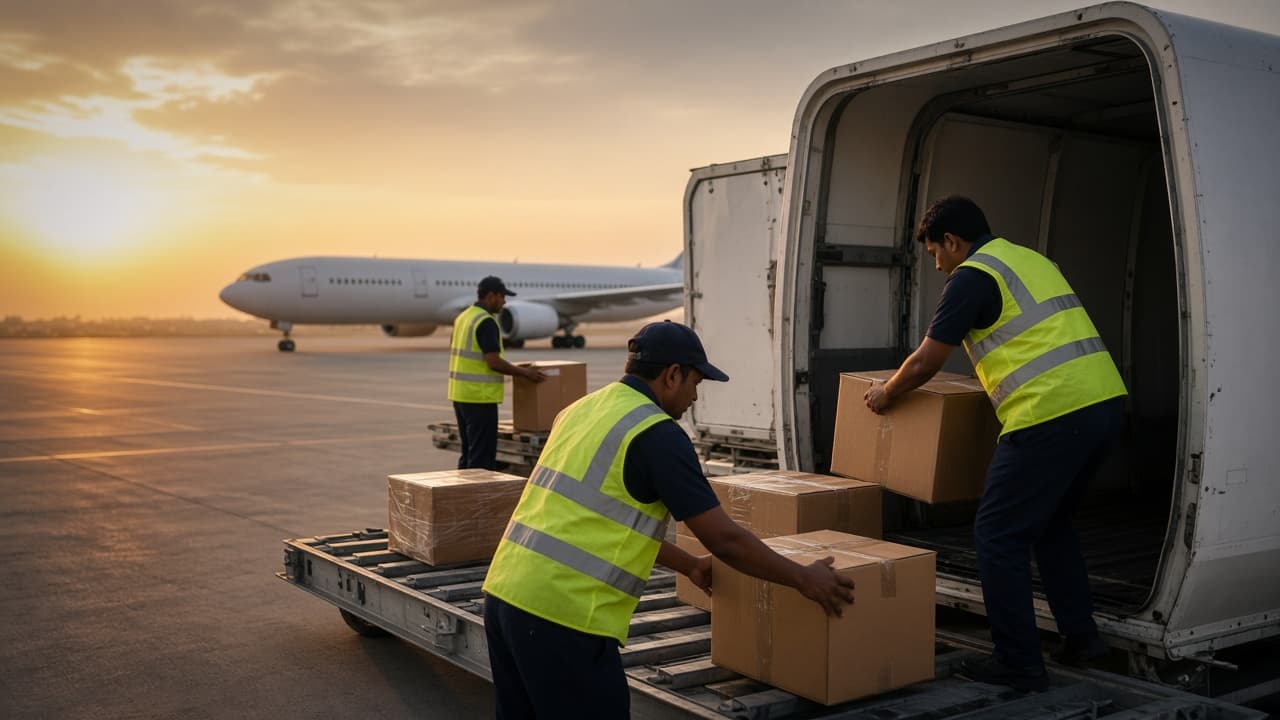
Getting export shipments from India to customers abroad.