
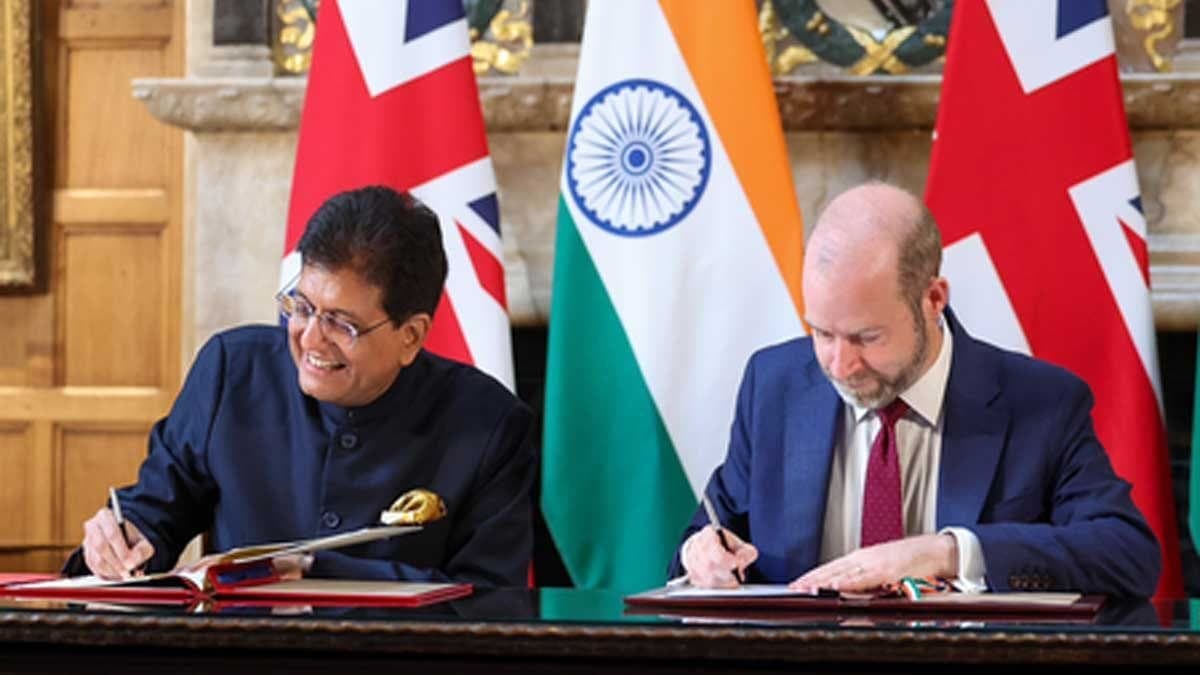
India and the United Kingdom have elevated their strategic partnership with the formal signing of the Comprehensive Economic and Trade Agreement (CETA) on July 24, 2025. This milestone, executed under the stewardship of Prime Minister Narendra Modi and UK Prime Minister Sir Keir Starmer, witnessed Commerce and Industry Minister Piyush Goyal and UK Secretary of State for Business and Trade Jonathan Reynolds formalize the pact in a ceremony attended by both national leaders.
Advancing Global Economic Partnership
This Free Trade Agreement (FTA) stands as a pivotal achievement in India’s ongoing engagement with developed economies, reflecting a mutual resolve to deepen economic ties and bolster integration. Representing the world’s fourth and sixth largest economies, the strengthening of Indo-UK relations carries significant implications for the global economy.
The signing of CETA follows the successful culmination of negotiations announced on May 6, 2025. Bilateral trade currently stands at nearly $56 billion, with both nations committed to doubling this figure by 2030.
Key Benefits of CETA
Unprecedented Market Access
Under CETA, 99% of Indian exports to the UK will enjoy duty-free entry, benefiting a broad range of goods. This improved market access is expected to particularly benefit India’s labour-intensive sectors, including:
- Textiles and garments
- Marine and fishery products
- Leather and footwear
- Sports goods
- Toys
- Gems and jewelry
- Engineering goods
- Automotive components
- Organic chemicals
Broad-Based Gains for Services
Boost to India’s Services Sector:
The agreement further opens the UK market to Indian companies in key areas such as IT and IT-enabled services, financial and legal services, education, and digital trade.
Simplified Professional Mobility:
Indian professionals—including architects, engineers, chefs, yoga instructors, musicians, and others—will benefit from streamlined visa applications and expanded entry categories, facilitating easier placement and mobility for skilled talent across sectors.
Double Contribution Convention
Social Security Relief: Indian employees and their employers will not be required to contribute to UK social security for a period of up to three years. This measure reduces employment costs and enhances the appeal of Indian professionals to UK-based companies.
Inclusive and Sustainable Design
CETA incorporates provisions to support a more inclusive trade environment:
Empowering Entrepreneurs and MSMEs
Women, youth entrepreneurs, small businesses, farmers, and fishermen will gain improved access to international value chains.
Innovation and Sustainability Focus
The agreement encourages practices promoting innovation, sustainability, and the reduction of non-tariff barriers.
Conclusion
Union Commerce Minister Piyush Goyal acknowledged Prime Minister Modi’s vision and leadership as instrumental in achieving this historic agreement, highlighting CETA as a balanced and progressive framework. He emphasized its role in advancing the ‘Make in India’ initiative, enhancing opportunities for exporters, MSMEs, and innovators, while safeguarding India’s strategic interests.
CETA is poised to significantly increase bilateral trade flows in the coming years, facilitate job creation, broaden export markets, and foster a resilient India-UK economic partnership suited to the complexities of the 21st-century global landscape. The agreement sets a new benchmark for mutually beneficial trade pacts between major economies, strengthening the foundation for inclusive growth and sustainable prosperity.