
Choosing the best shipping method - air freight, sea freight, or express couriers - can make all the difference for your business’s bottom line and customer satisfaction. Here’s a direct comparison to help small exporters and growing brands make the smartest choice in 2025.
When to Use Each Shipping Option
Air Freight: Fast and Reliable for Urgent or Light Shipments
- Recommended for urgent deliveries, high-value goods, light or fragile products (like branded garments, electronics)
- PROs: Fast global delivery (1–5 days), predictable schedules, greater reliability, safer handling
- CONs: High cost (can be 4–10 times higher price than sea), cargo size and weight limits, strict regulations
Sea Freight: Affordable for Bulky, Non-Urgent Goods
- Recommended for large quantities, bulky or heavy cargo (like furniture, textiles in bulk, handicrafts), restocking inventories
- PROs: Most economical for volume, ideal for containers/large lots, better for environment
- CONs: Slowest (15 – 45 days), extra customs/port paperwork, risk of port/route delays
Express Couriers: The Go-To for Small Shipments, Samples, and E-commerce
- Recommended for small parcels, samples, urgent e-commerce orders (under 30 kg), door-to-door delivery
- PROs: End-to-end service (pickup, customs, delivery), fastest (1–3 days), integrated tracking and returns, fewer documentation hassles
- CONs: Highest per-kg cost, not suitable for bulk or budget shipping
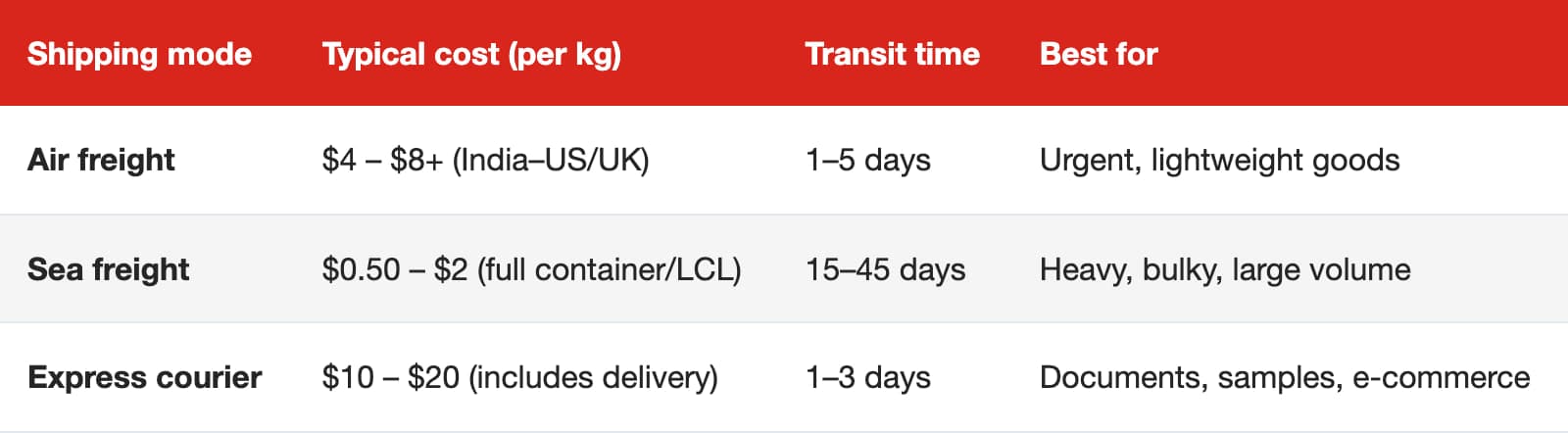
Cost Breakdown & Transit Time
- Air is 4 -10 times the price of sea, but sea takes weeks.
- Express couriers are fastest but most expensive service.
How Incoterms (FOB, CIF, DDP) Relate
- FOB (Free on Board): Seller handles cost/risk until goods are loaded on the ship/plane; good for experienced import/export businesses.
- CIF (Cost, Insurance, Freight): Seller covers cost, insurance, and freight to destination port; buyer handles customs after arrival and common for sea freight.
- DDP (Delivered Duty Paid): Seller manages everything to buyer’s door (shipping, customs, duties). Most often used by e-commerce sellers and express couriers; buyers get complete peace of mind.
Real-World Examples
- Garments/Bulk Textiles: Sea freight is best for full-container (FCL) or large LCL volumes to big buyers or distributors.
- Electronics/Branded Items: Air freight suits high-value, fragile goods that lose value if delayed; small phones and gadgets also move by express courier for D2C e-commerce.
- Handicrafts/Custom Orders: Sea freight for large decor pieces, express for samples or single-piece B2C orders needing fast international shipping.
Final Tip
Pick air freight for speed and urgency; sea freight for cost and volume; express couriers for maximum speed, e-commerce, and light parcels. Match your Incoterms to the shipment, customer and always factor in landed cost not just transport but customs, handling, and last-mile delivery for a smooth and profitable trade experience.